
Gen Z and Gen Alpha:
The Next Financial Growth Lever
in the Banking Sector
The global financial sector is at a turning point. For decades, the strategies of banks, insurers, and fintechs were designed for Millennials (Y) and then adapted for previous generations. Today, a powerful new signal is emerging in every strategic report: Gen Z (born 1997-2011) and Gen Alpha (born 2011-2025) are no longer just the consumers of tomorrow. They are the next growth lever for the financial sector - and the window of opportunity is already open.
From Mastercard to McKinsey, from Bank of America to PwC, the world's leading institutions are reaching the same conclusion: those who successfully engage these two generations early will win the loyalty battle for the next twenty years. In Tunisia, this reality takes on an even more strategic dimension. This is precisely the challenge that Flexee Pay has chosen to meet today.
1. An Accelerating Economic Powerhouse
The primary reason these generations are capturing the attention of the global financial sector is simply their growing economic weight - and the speed at which it is increasing.
According to the Bank of America Institute report - "Gen Z: A New Economic Force" (March 2025), Gen Z's economic power is expected to rise from $2.7 trillion in 2024 to $12.6 trillion in the coming years. Data shows that Gen Z household spending growth is already outperforming the national average, particularly in leisure (+25.5% YoY) and travel (+13.8%).
The Mastercard report - "The Next Growth Generation" (February 2026) confirms this global outlook: Gen Z is projected to reach $33 trillion in cumulative income by 2030. As for Gen Alpha, though mostly still children, they already influence over $5.5 trillion in annual household spending worldwide.
These figures are far from abstract. In concrete terms, the young people opening their first account, making their first transfer, or completing their first digital purchase today are the most valuable customers in tomorrow's financial system.
2. Digital-native generations reshaping financial behavior
Beyond the macroeconomic story, Gen Z and Gen Alpha stand out because of a deep behavioral shift: they have never known a world without smartphones, contactless payments, or apps. For them, finance is not an institution. It is a digital experience.
The PwC "Gen Alpha Survey Report" (2026), based on more than 1,000 children aged 7 to 14 and their parents in the United States source PwC, shows that Gen Alpha adopts financial behaviors from a very early age, with a natural command of wallets, digital interfaces, and a growing influence on family purchasing decisions. These children no longer ask for pocket money in cash. They ask for digital access.
Among 13-14 year olds in the U.S., nearly 23% already actively use digital wallets. That share rises quickly with age and points to a structural shift, not a temporary trend. For Gen Z, the pattern is even stronger: according to Deloitte and Mastercard, more than 80% prefer managing their finances through a mobile app rather than through a branch.
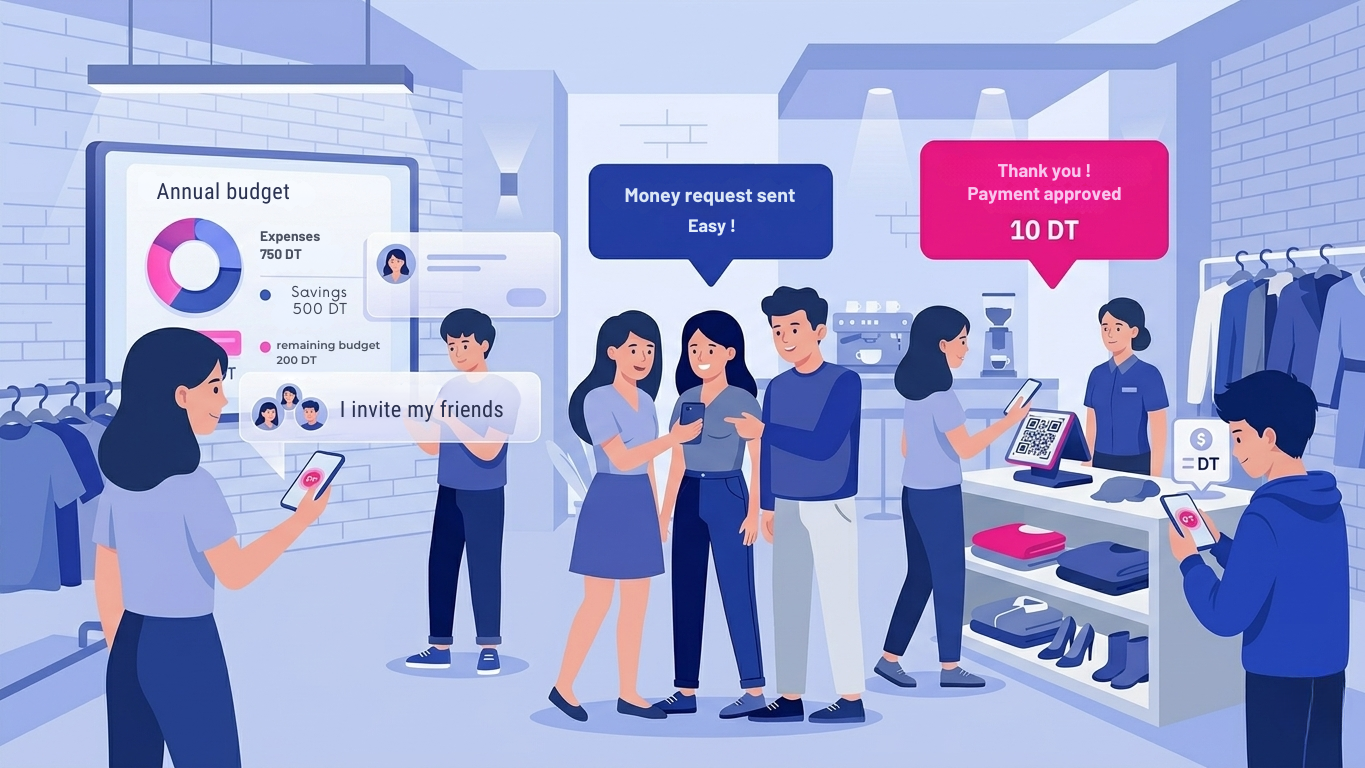
This transformation in behavior is also documented by Deloitte Insights "Gen Z and Millennials: What Banks Must Know" (2025) source Deloitte: the future of banking will be shaped by the irreversible integration of digital into every aspect of financial life, with expectations centered on seamless access, hyper-personalization, and money management on the consumer's terms rather than the institution's constraints.
Put differently, young customers will not adapt to traditional banks. Financial players will have to adapt to them. And the fintechs that build trust during adolescence will start with a decisive advantage.
3. An urgency traditional players can no longer ignore
Established financial institutions are beginning to measure the scale of the risk. The McKinsey report "Banking on the Next Generation" (2025) source McKinsey is clear: banks face an alarming aging of their customer base and a decline in primary banking relationships among younger generations. Without a strong repositioning toward youth, they expose themselves to structural erosion in deposits and profitability over the medium term.
The message becomes even more striking when combined with the BCG & QED "Global Fintech Report 2025" source BCG & QED: globally, fintechs still capture only 3% of banking and insurance revenue pools. That means 97% of the global market is still to be won, and the least served segments, especially young people and emerging markets, represent the strongest growth opportunity.
In MENA and African markets, that opportunity is even larger. A combination of very young populations, low formal banking penetration, and accelerating mobile adoption creates ideal conditions for players that position themselves quickly.
4. Gen Alpha is entering finance earlier than ever
One of the most striking lessons from recent studies is how much earlier the first contact with finance now happens. According to the Mintel "US Gen Alpha & Gen Z Finance Consumer Report" (2025) source Mintel, Gen Alpha is entering the financial landscape earlier than any generation before it, already equipped with pocket money, digital fluency, and early financial curiosity. That early entry gives institutions and fintechs a golden opportunity to reach this segment at the very start of its financial journey, before habits become fixed.
The report also highlights the central role of parents. They remain their children's first financial educators, but they increasingly want to give them more control, paired with structure and appropriate supervision. That parenting model, gradual independence with guardrails, is exactly what the best youth financial education solutions are trying to embody.

5. What about Tunisia? A youth-dense market that remains underserved
Tunisia offers a particularly favorable profile for the rise of youth-focused financial solutions. With half of the population under 30, rapidly rising smartphone penetration, and fast adoption of digital habits among 12-25 year olds, all the ingredients are there.
Yet the paradox is striking: according to World Bank data, formal financial inclusion for 15-24 year olds in Tunisia does not exceed 24%. The vast majority of young Tunisians have no account, no card, and no real tool for managing money. They operate in a largely cash-based economy with little traceability and no structured financial education.
That gap is also an opportunity. Mobile payment volumes in Tunisia are rising quickly, driven by the adoption of D17, Flouci, and Tunisian Post wallet solutions. Regulation is moving in the right direction. The startup ecosystem is active. What was missing was a solution designed specifically for young people, combining payments, pocket money management, parental supervision, and financial education in a single product.
6. Flexee Pay: building tomorrow's financial relationship today
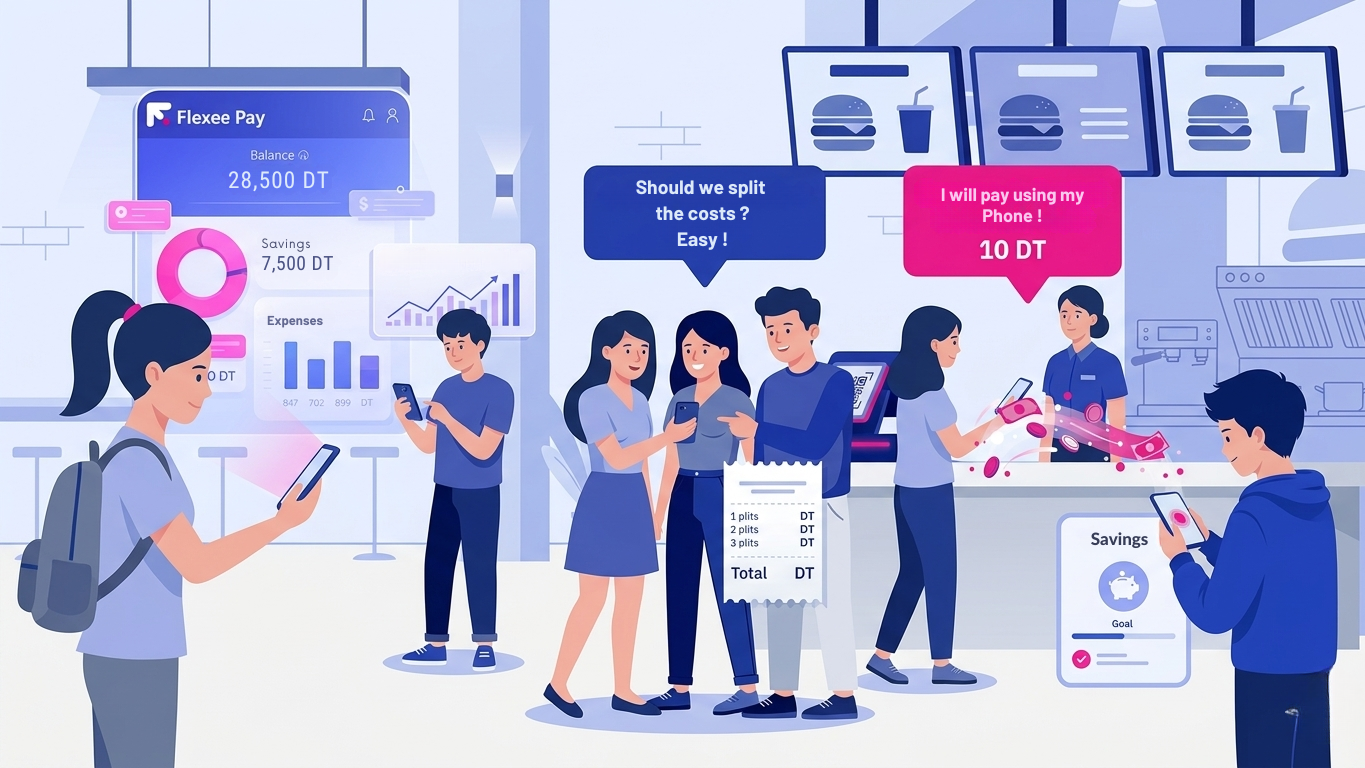
This is the context in which Flexee Pay was created. Not as an opportunistic response to a trend, but as a founding belief: to provide a real financial inclusion and education solution for Gen Z and Gen Alpha in Tunisia.
- For young people aged 12-25: a mobile app to manage pocket money, pay partner merchants, track spending, and learn the basics of finance through Flexee Academy and Flexoo, their AI financial coach.
- For parents: a non-intrusive supervision dashboard to send pocket money, define limits and alerts, track expenses, and gradually guide their child toward financial autonomy.
- For merchants: access to a new young and digital customer base, with loyalty tools aligned with their consumption habits.
Flexee Pay is not just another payment app. It is a full financial inclusion journey, designed to support young Tunisians from their first dinars of pocket money to their first ambitions in adult life.

The global data is clear, the studies converge, and the market is moving. Gen Z and Gen Alpha represent the next major growth lever for the financial sector. In Tunisia as elsewhere, those who support them early with the right tools will build the most durable banking relationships.
Flexee Pay is that answer. And the time is now.
Sources
- Mastercard - "The Next Growth Generation: Winning with Gen Z and Gen Alpha" (February 2026)
- Bank of America Institute - "Gen Z: A New Economic Force" (March 2025) - public PDF - U.S. data
- PwC - "Gen Alpha Survey Report" (2026) - U.S. survey
- Mintel - "US Gen Alpha and Gen Z Finance Consumer Report" (2025)
- Deloitte Insights - "Gen Z and Millennials: What Banks Must Know" (2025)
- McKinsey & Company - "Banking on the Next Generation" (2025)
- BCG & QED - "Global Fintech Report 2025" - Global - public PDF
